

The Path Of Least Resistance
It all begins with an idea.
Our bodies are made up of layers and layers of adaptations and compensations which are the result of a wide range of stresses and strains we put on ourselves. These stresses and strains can come in physical and/or emotional forms and it is the way in which we as a mind, body, and spirit try to find some resemblance of balance between ourselves and our internal and external environment. All of this together is what shapes us in this very moment and this is how we are balanced in this very moment, and this means that the body is doing exactly what needs to be done. This is a difficult idea to grasp particularly if we are suffering from pain or a condition but even in these situations the body is trying it’s best to adapt and find balance even if it feels like the balance is wrong. With Osteopathic treatment, one of the aims is to assist the body in finding a better balance that will allow the body to function the way it is supposed to.
The path of least resistance refers to several things:
In relation to illness, the weakest link in the chain is going to be the one that reacts to stress (emotional and/or physical). A weak link can be a structural imbalance causing too much strain on a joint, causing the muscles around it to work harder to stabilise. This “restricted” joint will impact the flow of blood and in turn the nerves. It could also be a from memory of a trauma and the body reacts by holding an area under tension, this tension will again affect the structural balance, nerves and blood supply.
In relation to treatment, there is the principle of using the stronger to build the weaker. This is important to coordinate the body and bring balance gently.
Another element of treatment in relation to restricted movements of tissues whether bone, fascia, organs etc is to bring the joint into a position of ease i.e. no resistance, this position is not the neutral position but the neutral for that particular tissue, and then to use breathing to facilitate the unwinding of the tissue back to it’s normal position.
The body is constantly listening and adapting to every sensory input we receive and there is a constant flux between balanced and unbalanced. The fluctuations and flows occurs in all of nature. If we can keep the ebbs and flows nice and calm, then that is a good balance.
Three Interpretations In The Room
In every treatment there are three interpretations of a patient presentation.
The patient tells us what they think is going on. This is often a description of the symptoms and the location of the discomfort.
The practitioner, based on the physical examination along with the patient’s interpretation, makes an informed guess of what they think is likely to be going on.
The patient’s body will be communicating exactly what is going on with the patient.
The patient’s report is important for insight into how they are feeling towards their presenting symptoms but also there can very likely be a local issue.
The practitioner, as much as possible, should remain objective. Yes, they should do all the appropriate examinations to make sure there isn’t anything that needs further investigation, but they shouldn’t also think along the lines of “fix this part” because the body is one unit.
One of the key differences with the Classical Osteopathy approach is that we treat what we find. This means we are responding to the body’s needs at that moment. It is important to mention that this is in the context of the patient’s underlying “lesion pattern”. An oversimplified explanation of a lesion pattern is the way the body has adapted to all the stress’ and strains over the duration of life. These adaptations represent the body doing its best to adapt to its current internal and external environment.
The day-to-day fluctuations in our internal and external environment is reflected in the reactions of the body. This is what informs the practitioner of what the body needs to be able to adapt to these fluctuations. And amongst this, we are also gently nudging at the underlying lesion pattern and creating a small change so the body can find a better balance with time.
Who Is Littlejohn?
It all begins with an idea.
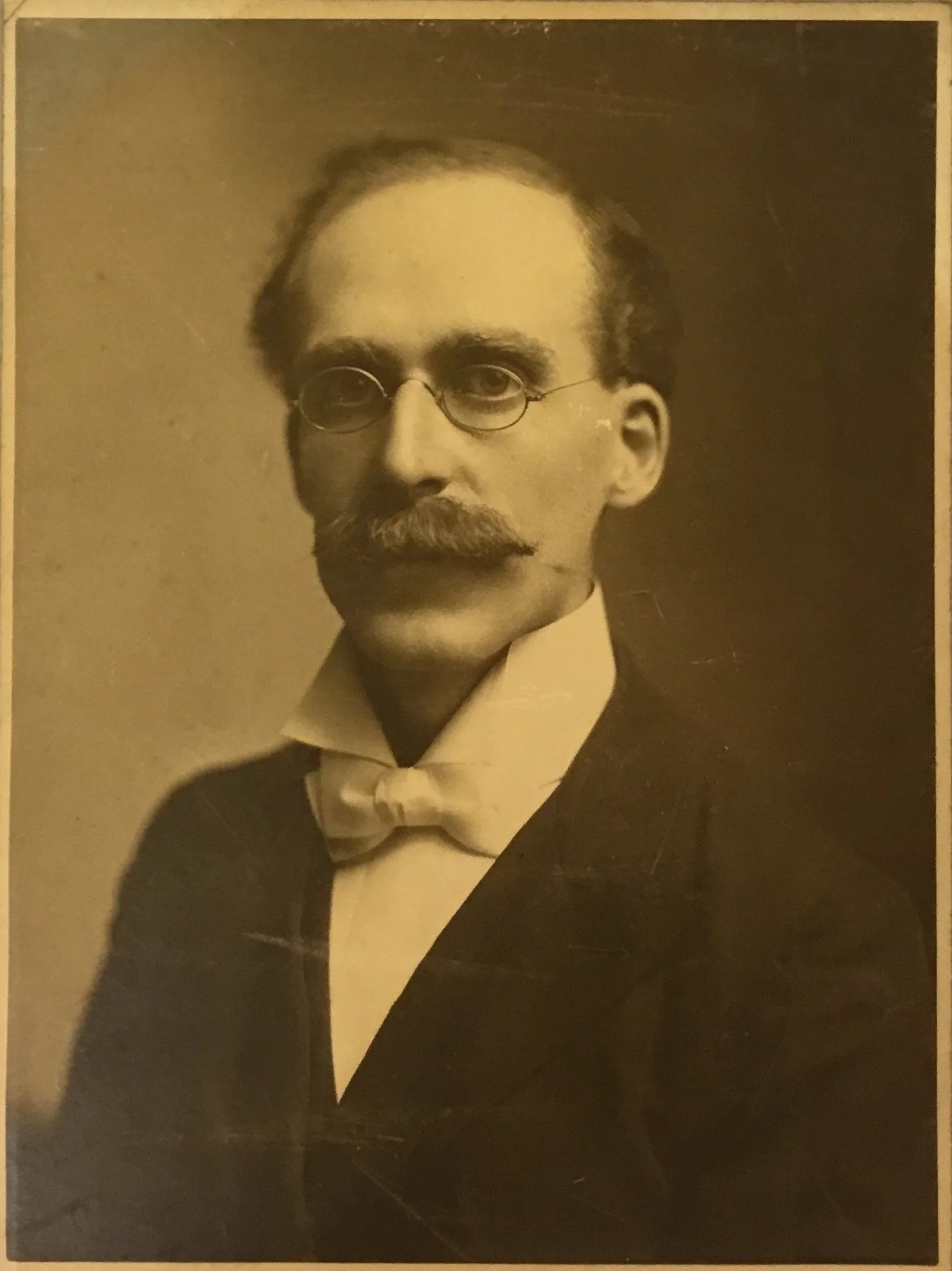
John Martin Littlejohn (1865 – 1947) was and remains an eminent figure in the history of Osteopathy. Born in Scotland, he was a true academic who studied theology, law, medicine, and philosophy. In 1897, he was suffering from a chronic throat condition that led him to seek treatment from Dr Andrew Taylor Still, the founder of Osteopathy.
Inspired by Still’s work, Littlejohn quit his academic career to study and teach at the American School of Osteopathy in Kirksville, Missouri. In 1900, alongside his two brothers, The Littlejohn Hospital was opened in Chicago, Illinois. This teaching hospital became a cornerstone for the advancement of Osteopathic medicine, combining clinical practice with educational initiatives to train future osteopaths.
He went on to establish the first school of Osteopathy outside of the United States, in London, in 1917. “The British School of Osteopathy” played a fundamental role in the dissemination and formalisation of Osteopathy in Europe.
His understanding of Osteopathy went far beyond simple medical practice. He recognised the advantages of utilising advancements in the understanding of chemistry, biology, physics, and physiology, and applied this knowledge to further develop the foundational principles and philosophy set by Andrew Taylor Still.
Littlejohn’s vision and approach to Osteopathy was rooted in principles – of “adjustment”, “vital force”, and “articulation”, and he wrote countless papers outlining the principles and the application of Osteopathic therapeutics.
This fundamental knowledge and understanding he brings is the true Osteopathy and the Osteopathic approach to healing the body. It is sad to say that in recent times, newly graduated Osteopaths have forgotten these roots or have not been educated in this foundation and the result is a form of Osteopathy that is largely superficial and adherent to a medical and allopathic model of treating symptoms as opposed to the cause.
At the Littlejohn Centre, we remain dedicated to the preservation of this knowledge and to put principles and philosophy into practice, as was the intention and vision of A.T. Still and John Martin Littlejohn.