
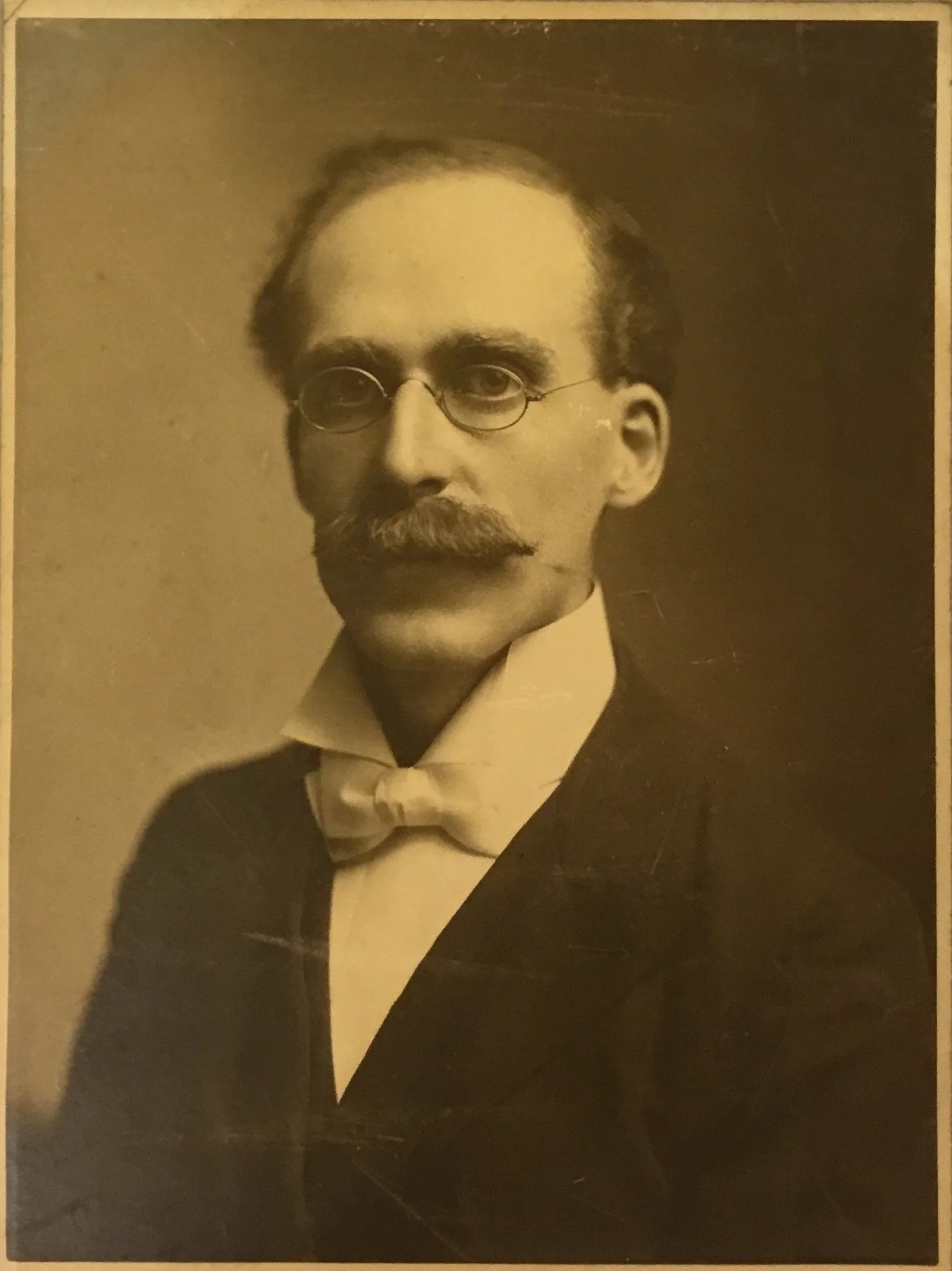
John Martin Littlejohn (1865 – 1947) was and remains an eminent figure in the history of Osteopathy. Born in Scotland, he was a true academic who studied theology, law, medicine, and philosophy. In 1897, he was suffering from a chronic throat condition that led him to seek treatment from Dr Andrew Taylor Still, the founder of Osteopathy.
Inspired by Still’s work, Littlejohn quit his academic career to study and teach at the American School of Osteopathy in Kirksville, Missouri. In 1900, alongside his two brothers, The Littlejohn Hospital was opened in Chicago, Illinois. This teaching hospital became a cornerstone for the advancement of Osteopathic medicine, combining clinical practice with educational initiatives to train future osteopaths.
He went on to establish the first school of Osteopathy outside of the United States, in London, in 1917. “The British School of Osteopathy” played a fundamental role in the dissemination and formalisation of Osteopathy in Europe.
His understanding of Osteopathy went far beyond simple medical practice. He recognised the advantages of utilising advancements in the understanding of chemistry, biology, physics, and physiology, and applied this knowledge to further develop the foundational principles and philosophy set by Andrew Taylor Still.
Littlejohn’s vision and approach to Osteopathy was rooted in principles – of “adjustment”, “vital force”, and “articulation”, and he wrote countless papers outlining the principles and the application of Osteopathic therapeutics.
This fundamental knowledge and understanding he brings is the true Osteopathy and the Osteopathic approach to healing the body. It is sad to say that in recent times, newly graduated Osteopaths have forgotten these roots or have not been educated in this foundation and the result is a form of Osteopathy that is largely superficial and adherent to a medical and allopathic model of treating symptoms as opposed to the cause.
At the Littlejohn Centre, we remain dedicated to the preservation of this knowledge and to put principles and philosophy into practice, as was the intention and vision of A.T. Still and John Martin Littlejohn.